



UAE businesses could benefit from GCC capital markets where Assets under Management hits US$2.2 trn, experts at an ICAI conference says

Innovation and transformation will create new opportunities for accounting professionals in the UAE where members of the Institute of Chartered Accountants of India could lead the changes by accessing the capital markets.
Dubai – UAE; April 28, 2026
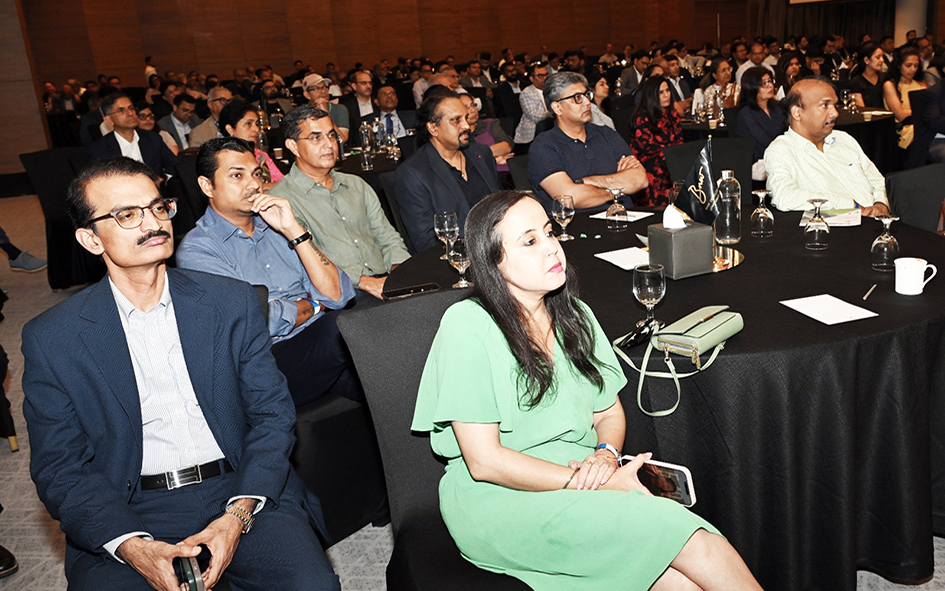
The recently announced plans by the UAE Government to automate 50 per cent of the government organisations and services through Artificial Intelligence (AI) for autonomous execution and decision-making creates opportunities for businesses and professionals in the UAE who could play a great role in this transformation, experts said at a packed conference, organised by the Dubai Chapter of the Institute of Chartered Accountants of India (ICAI), attended by more than 500 professionals.
The conference titled, Gateway to Capital Markets: IPOs, Bonds and Sukuks Unblocked, highlighted the opportunities in accessing the region’s debt capital markets and how capital raising could transform UAE family-owned businesses into becoming more transparent, agile, and professionally-run and help them navigate through succession to the next generation.
The conference took place at a time when the GCC debt financing reached record highs, with total issuances projected to reach US$226 billion in the first 11 months in 2025, driven by high investor demand, tighter spreads, and corporate refinancing needs, far exceeding 2024 levels, according to a report by credit rating agency Fitch Ratings. Saudi Arabia (US$82 billion) and the UAE (US$64.9 billion) accounted for the majority of the issuance, driven by economic diversification projects, such as Vision 2030. Unlike previous years, the 2025 market saw a massive rise in corporate debt issuance to US$128.6 billion, overtaking government issuances.
“The world and the UAE are changing very fast, in fact so fast that it is becoming difficult for many of us to keep up with the pace. With the growth comes the need for capital to fund it and history tells us businesses fail not because they don’t have a great idea, but they fail because they can’t have access to capital to fund these great ideas. Here Chartered Accountants can play a pivotal role and bridge that important gap,” CA Rishi Chawla, Chairman of the Dubai Chapter of the ICAI, said.
“So, it is important for the UAE businesses and the financial professionals to understand the winds of change and help their companies to access capital to fund the changes to remain relevant and perhaps to be on top of the game. Many financial professionals are yet to tap the debt and capital markets and see how they can influence changes in their organisations.
“An Accountant records history. But a Chartered Accountant shapes the future. The future belongs to those who believe in the beauty of their dreams. We as Chartered Accountants must lead the change and help our organisations to excel amidst the change,” CA Rishi Chawla concluded.
GCC banks drove significant issuance, exceeding US$60 billion, to manage maturity walls and support strong credit growth, with Saudi lenders leading at US$28.3 billion. Islamic Sukuk remained a crucial instrument, with GCC dollar-denominated Sukuk surpassing US$70 billion, marking a significant year-on-year increase, according to a report published by the Global Business and Finance Magazine.
CA Neeraj Agrawal, Board Member and Group Chief Financial Officer of Crescent Group Holdings, said, “The UAE is about to change drastically. It is not going to the same country that it has been for the last few decades. Businesses can benefit from these changes that are going to take place in the next few years from now. The role of the professionals are changing, mostly the Chartered Accountants. They need to develop soft skills to excel in an evolving society.”
Debt issuances by banks in the GCC are set to remain strong through 2026 after exceeding US$60 billion so far this year, Fitch Ratings said in a new report. The surge was driven by heightened maturities, strong credit growth, and favourable financing conditions.
“We expect continued strong issuance in 2026, supported by further US Fed rate cuts, US$36 billion of debt maturities, additional strong credit growth in Saudi Arabia and the UAE, and persistent tight domestic liquidity conditions in Saudi Arabia,” Fitch stated.
Issuance this year has already reached US$55 billion, beating the 2024 total of US$36 billion and the 2025 maturities of US$23 billion. Excluding CDs, issuances reached US$36 billion, outpacing Fitch’s start-of-the-year estimates. Saudi lenders lead issuance with US$28.3 billion, followed by banks in the UAE, at US$11 billion, Qatar (US$8 billion), and Kuwait (US$7 billion). Sukuk accounts for nearly half of the new deals, excluding CDs. “We expect UAE bank issuance to remain driven by refinancing and diversification as the sector has good liquidity and a solid net foreign asset position,” the report said.
GCC banks account for almost 30 per cent of US dollar issuance by emerging-market banks this year, and more than 60 per cent when excluding Chinese banks. Subordinated debt sales by GCC banks this year have already reached US$14.5 billion, compared to US$7 billion in 2024, accounting for 40 percent of issuance, excluding CDs.
Hitesh Asarpota, Chief Executive Officer of Emirates NBD Capital, said, “Debt issuance was 5 percent in the UAE in 2005, when I came to the UAE and started my journey here, when the same was 60 per cent in European economies. So, the market was at a very nascent stage and I decided to be part of this exciting journey in accessing debt and capital.
“A lot has changed in the last 5 years in the UAE’s capital markets – which had 95 percent retail investors with more than 90 percent of them were UAE nationals. However, institutional investors, foreign investors and sovereign wealth funds are now investing in the market that is fuelling the growth. One could benefit immense opportunities in the capital markets that has seen more than US$2.2 trillion Assets Under Management (AUM). So, be part of the future growth story.”
As the UAE strengthens its position as a global business hub, the ICAI Dubai Chapter remains committed to supporting its members through continuous professional development, thought leadership initiatives, and strategic partnerships aligned with the nation’s long-term vision. With more than 3,200 members, ICAI Dubai Chapter is the largest business group in the UAE. Established in 1982, it has registered membership exceeding 3,200 members who represent more than 1,550 multinationals and other companies.
ICAI is the largest professional body of Chartered Accountants across the world with over 1,000,000+ students and around 450,000+ members. ICAI has a wide network with five Regional Councils, 176 Branches, 54 Overseas Chapters, and 31 representative offices across the globe. And among 54 overseas chapters, ICAI Dubai Chapter is the largest and most vibrant chapter of ICAI. Of the 8,000 Indian Chartered Accountants active in the UAE‘s private sector, 1,400+ are currently leading businesses in senior positions.