



Boots Introduces No7 Good Intent.. The Skincare Routine Designed for Every Age, Every Day
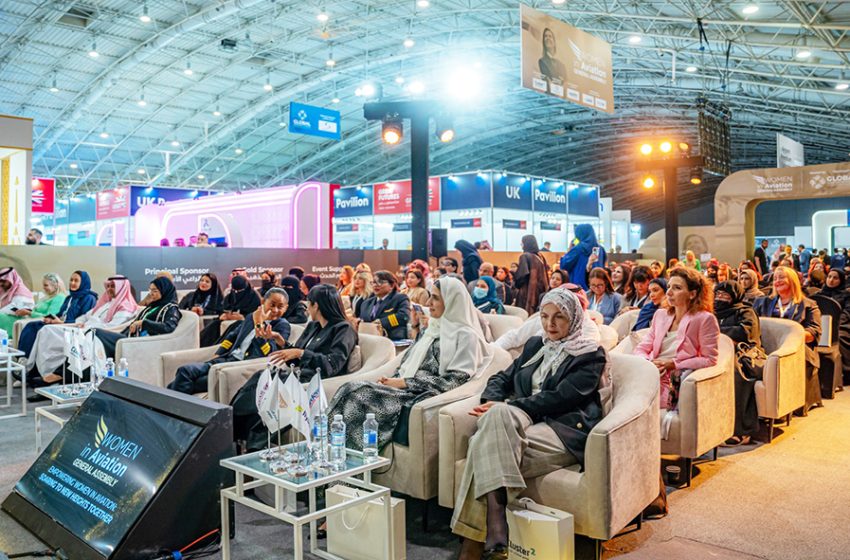
Women in Aviation (WIA) General Assembly in Riyadh during Global Airports Forum (GAF)
Among the 40 speakers will be the first Arab female A380 pilot.
Ways to be chalked out for building a diverse workforce.
17% of leadership roles held by women across Saudi airports.
Riyadh Air initiated the first all-female engineering program.
WIA-2025 Awards to be presented in ten categories.
Riyadh, Saudi Arabia, 2025
The Middle East chapter of the Women in Aviation General Assembly (WIA), the world’s largest non-profit aviation and aerospace organization, will hold its General Assembly during the 4th Global Airports Forum (GAF) in Riyadh on December 16.
The highly anticipated gathering comes as Saudi Arabia has been witnessing significant growth in women’s participation in the aviation domain. To be held at the Riyadh International Convention and Exhibition Centre (RICEC), its gold sponsor is Red Sea International and Marketing Partner is Gulf Air. The Airline Partners are Riyadh Air, Turkish Airline, and flyadeal. The Supporting Partners are Boeing, Alwayse Engineering Solutions, Nth Consulting Group, and Elevate (her).
More than 500 delegates will be attending the WIA General Assembly. The key entities that will be sending large groups of delegates include Prince Sultan University (PSU), Oxford Flight Academy, National Aviation Academy, Princess Noura University, King Saud University, Imam Muhamad Ibn Saud Islamic University, DAA International, and Saudia Group.
Daksha Patel, Event Director, Niche Ideas, organizers of GAF, said: “There is a need to find out viable ways to enhance the presence of qualified and talented women across airports and other aviation domains. In the Middle East region, the representation of female pilots, air traffic controllers, and maintenance technicians is still disproportionately low and regional authorities and stakeholders are putting in place broad initiatives to improve this.”
The largest country on the Arabian Peninsula has been recording, for a decade, a broader societal shift in attitude towards women entering the public-facing roles, especially at airports. It was only in 2018 that five Saudi female pilots were selected to work for Saudia, the flag carrier, and females were encouraged to enrol in flight training schools.
Now, women hold over 17 percent of leadership roles across airports, airlines, and ground services, highlighting the exceptional progress being made. Outstanding examples of this include Riyadh Air’s first all-female engineering program to boost women’s roles, aligning with the kingdom’s Vision 2030 goals.
Mervat Sultan, President-Founder of WIA’s Middle East Chapter and Co-Founder of Ramjet Co and FltCtrl Ltd, remarked, “We remain focused on enhancing the presence of women professionals in the aviation industry. As Saudi Arabia aims for aviation to be a key driver of its rapid economic growth, aviation stakeholders should collaborate to foster meaningful diversity and inclusivity. Several organizations are working tirelessly to enhance female participation in the aviation domain and we applaud these efforts.”
After its formal opening ceremony, the WIA gathering will be addressed by Andrew Smith, CEO at Red Sea International Airport, and Eng. Wahhaj Hamed Motawie, President of the Saudi Academy of Civil Aviation. This will be followed by the presentation of the WIA Awards across ten categories, including Sustainable Women Empowerment Initiative, Global Women Empowerment, Pioneer in Female Aviation, Groundbreaking Women Empowerment, Leadership Women Empowerment Award, Distinguished Women Empowerment, Best Training Centre Support, and the Women in Aviation Empowerment Champion Award. A number of scholarships will also be announced at the event.
Sarah Alfaiz, Director for Strategic Planning and Intelligence at MATARAT Holding, tasked with overseeing the Kingdom’s 27 civilian airports, will present a keynote address on how women are shaping the future of Saudi aviation and “the impact of female leadership in aviation under Vision 2030.”
This will be followed by a panel discussion on “Smart Aviation: Women Pioneering the Digital Take-off.” The participants will explore how digital advancements are reshaping the aviation industry and how women are leading this transformation through innovation, driving the future of smart airports, AI-driven operations, and Next-Gen aviation technologies.
It will be moderated by Dr Eng. Suaad Al Shamsi, Board Member at WIA Middle East Chapter. The speakers will be Amal Hejles, Digital Strategy Director, MATARAT Holding, Buthaina Al Ghunaim, Airworthiness Engineer at Gulf Air, Eng. Rana Algowaiz, Executive Director at Saudia Cargo, Rawan Aljehani, Head of Digital, Data, and Business Intelligence at flyadeal, Swati Unnikrishnan, Consulting Director – Middle East, Africa and Turkey, SITA and Malak Alzahrani, Business Applications Lead, JedCO.
There will be a keynote address by Egypt’s Captain Nevin Mahmoud Darwish, the first Arab female pilot to command an Airbus A380 in July 2017, the world’s largest and heaviest passenger airliner, and the only full-length double-deck jet airliner, for Emirates Airlines. Speaking about her participation, Captain Nevin said. “I am honored to present my keynote at the Global Airports Forum and WIA General Assembly in Riyadh among aviation pioneers and the next generation of dreamers. Sharing my 35 years of experience in the aviation industry, I hope to highlight the vital role of women in shaping the future of aviation and inspiring future generations to dream big and aim high, no dream is out of reach”.
In the following session on ‘Building an Inclusive and Diverse Workforce’, the panellists will explore the evolving landscape of workplace inclusion in aviation, discussing how companies, policymakers, and leaders are driving diversity efforts. From recruitment strategies to mentorship programs and workplace policies, the discussion will highlight how organisations can create an environment where women and underrepresented groups thrive.
It will be moderated by Rachel Akili, Strategic Advisor for Human Capital at daa International, an Ireland-headquartered global airports and travel retail group with operations in 15 countries.
The speakers include Heba Abozenadah, Talent Management Director at Jeddah Airport Company (JEDCO), which operates the King Abdulaziz International Airport, one of the top 100 airports in the world; Natalie J. Salinas, Founder and CEO, Nth Consulting Group; Dr Heba Bakr Khoshaim, Vice President for Students Life, at Riyadh’s Prince Sultan University (PSU); Dr. Mody Alkhalaf, Director of Talent Development at Riyadh Air, and Apiu De Maiwak, Principal Aerodromes and Ground Aids at South Sudan Civil Aviation Authority.
The panel discussion on ‘Navigating the Future of Sustainable Aviation’ will explore how airlines, airports, and aviation professionals are driving efforts to make the skies cleaner, greener, and more efficient.
The discussion will highlight the contributions of female leaders, engineers, and sustainability advocates who are shaping the future of aviation through key initiatives in carbon reduction and eco-friendly airport operations. It will be moderated by Sohail Ali, Senior Vice President for Operations, Aerospace Engineering Solutions (AES Global), a global GSE leader, who commented, “I am looking forward to shining the spotlight on the incredible women shaping aviation’s sustainable future. This conversation isn’t just about representation, it’s about transformation”.
The panellists on the session include Dr. Emad Alharbi, Mobility Decarbonisation Director at SWD Futures, a global advisory company specializing in sustainable transition strategies, and Maryam Telmesani, Vice President of Sustainability at Saudia Group, the kingdom’s aviation conglomerate, which includes Saudia and its LCC, flyadeal. Other panelists include Amani Alonazi, Associate Technical Fellow at Boeing, Sara Sabt, Director Risk Management and Sustainability at Gulf Air Group, and Lmaa Alseraihi, Environment Field Operative at Red Sea International Airport.
A keynote address on ‘Transforming Travel: From Operational Excellence to Passenger-Centric Innovation’ will be delivered by Sumayyah Khawaji, Director, Operations Efficiency and Standardisation, CATRION, a leading Saudi company that provides catering services to Saudia.
There will be a special session, From Classrooms to Cockpits: Young Voices Taking on Aviation’s Future. This session will highlight the rising generation of aviation leaders from the Middle East and Africa who are already making their mark. From academic excellence and innovative research to bold ideas on sustainability, technology, and inclusion, these emerging voices will share their journeys, challenges, and vision for the future of aviation in the region.
It will be moderated by Nora Almohizai of Space Generation Advisory Council (SGAC), a non-governmental organization and professional network whose goal is to convey the perspectives of young space professionals to the UN, the Space industry, Space agencies, and academia. It represents 15,000 members from over 150 countries worldwide, and holds permanent observer status at the UN Committee on the Peaceful Uses of Outer Space.
Speakers on this panel include Eithar Alyaqoub, Safety and Quality Specialist, Aerospace Engineer at Saudi Airlines, Medilna Amel, a Commercial Pilot, Abir Dali, a student pilot, Norah Al Qahtani, Airport Operations Planning Officer, Riyadh Airports, and Lama Alanazi, Aerospace Engineer at General Authority for Military Industry (GAMI).
The panel on ‘Career Pathways in Aviation: Beyond Piloting’ will explore alternative career pathways in aviation, showcasing opportunities in airline management, airport operations, aviation engineering, air traffic control, sustainability, and emerging aviation technologies.
Its moderator will be Captain Al Harath Bin Sama, Pilot Instructor at Intercontinental Aviation Academy. The confirmed speakers include Liana Coyne, Director, Coyne Airways; Dr. Sofia Mateou, Associate Professor, Aviation Management, Prince Sultan University; Marvi Bilal, Deputy Director – Commercial at Pakistan Airports Authority; Ohoud Alfatta, Marketing & Strategic Partnership Expert at Saudia Academy; Nouf Abdul Karim, Senior Manager for Succession Planning and Leadership Development at Riyadh Airports; Basem Shawesh, Head of ANS Training and ELP at Saudi Academy of Civil Aviation (SACA), and Hazar Hafiz, Head of Marketing and Customer Experience at flyadeal.
Women’s representation in the aviation domain is gradually progressing in the Middle East region. There is a need for greater discussion and collaboration on the most effective ways to enhance the presence of qualified and talented women across all civil aviation stakeholders. The representation of female pilots, air traffic controllers, and maintenance technicians is still disproportionately low, according to the IATA Gender in Aviation report.
The equality in aviation has yet to be fully realised. IATA’s 25by2025 has become a leading example of the aviation industry taking action to increase the number of women in senior positions. This initiative aims to improve female representation in the aviation industry by 25 percent by the end of 2025. India ranks the highest in terms of gender diversity in aviation, with women accounting for 14 percent of airline pilots.
CAPA-Centre of Aviation noted: “The pilot gender equality still has a massive mountain to climb. The growing women pilots would help to ease the global pilot shortage and diversify perspectives in a key part of the aviation workforce. Estimates of the percentage of the world’s airline female pilots range between four and six percent. The gender equality among cockpit crew – seen as the highest paid and highest status career in aviation – is very low by comparison with other fields of science, technology, engineering, and mathematics. A recent report noted that airlines had women in 42 percent of their workforce. An ICAO survey says the participation of women holding positions as pilots, air traffic controllers, and maintenance technicians has increased on overall basis globally.